10×3 Softball Pitching Mat: Non-Slip, Fade-Resistant
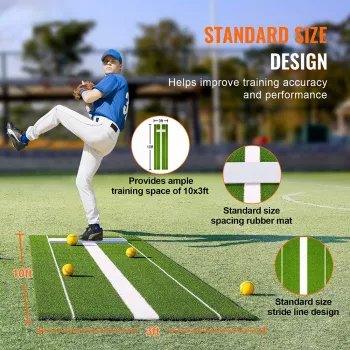
10×3 FT Softball Pitching Mat for Consistent Footwork and Safer Reps
A reliable pitching surface helps keep stride length, pivot placement, and landing mechanics consistent from rep to rep. A 10×3 ft softball pitching mat is built to create a defined training lane, stay put during aggressive drive-offs, and hold up through frequent bullpen work—whether you’re throwing at home, inside a batting cage, or on the practice field.
What This Pitching Mat Helps Solve
When mechanics start to drift, it’s often the environment—not effort—that’s the culprit. Uneven turf, dusty concrete, or a slick cage floor can change how the pivot foot pushes, how the stride lands, and how confidently a pitcher finishes the motion.
- Creates a repeatable lane for drive-off and landing, supporting consistent mechanics during high-volume sessions
- Reduces slipping risk compared with bare concrete, dusty cage floors, or worn turf
- Provides a portable alternative to building a permanent bullpen area
- Helps keep practice organized when multiple pitchers rotate through stations
Size and Training Space Planning (10×3 FT)
The 10-foot length gives enough room for a full pitching sequence: the initial push, stride, release, and a controlled follow-through. The 3-foot width creates a clear “channel” that encourages straight-line momentum toward the target and repeatable foot placement over dozens (or hundreds) of reps.
This footprint works well in common training spaces like garages, gyms, and cages—but it’s still smart to measure your full throwing lane to avoid cramped deceleration or clipped arm circles. If you’re building a backyard bullpen, pairing the mat with a catcher’s net or strike-zone target makes it easier to repeat timing and release cues at a consistent distance.
Quick Space Checklist
| Item to measure | Recommended approach | Why it matters |
|---|---|---|
| Mat area | Ensure a flat 10×3 ft footprint | Prevents wrinkles and shifting during push-off/landing |
| Runoff room | Allow extra space beyond the front edge | Gives room for safe deceleration after release |
| Ceiling clearance (indoors) | Confirm full arm circle clearance | Avoids interruptions and improves confidence |
| Target distance | Set a consistent distance to your net/target | Supports repeatable timing and release point practice |
For reference when setting a realistic at-home distance, check current pitching-distance standards from USA Softball and NFHS Softball Rules.
Non-Slip Performance and Why It Matters
Pitching is a high-force movement. The pivot foot drives aggressively, and the landing foot can hit hard—especially during speed days or when training with intent. A non-slip base helps keep the mat stable so the athlete can focus on posture, sequencing, and finish rather than worrying about sliding out.
- A non-slip base helps the mat stay stable when the pivot foot drives aggressively or when the landing foot hits hard
- Better traction supports controlled posture through release and reduces “bailing out” caused by fear of sliding
- Helpful in humid conditions or high-traffic training areas where floors can get dusty
- For best results, place on a clean, dry surface and press the edges flat before starting
Fade-Resistant Surface for Long-Term Use
When a mat gets used the right way, it gets used a lot. A fade-resistant surface helps the mat look and function like a training tool rather than a temporary accessory—especially if it’s used outdoors or frequently moved between facilities.
- Fade-resistant materials help markings and surface appearance stay clearer over time, especially with outdoor use
- Useful for coaches running frequent sessions where the mat is exposed to sunlight, friction, and repeated foot strikes
- Maintains a more consistent training look and visibility of any guidance lines or orientation cues
- Best practice: store out of direct sun when not in use to extend color and material life further
Setup Tips for Backyard, Cage, or Gym
Good setup is what turns a portable mat into a dependable bullpen lane. Small bumps or rocking can subtly change landing angles and add stress to knees and ankles over time, so take a minute to make the surface predictable.
Care and Storage to Keep It Performing
Bullpen Drills That Pair Well with a Defined Pitching Lane
Who This Mat Fits Best
Key Product Details at a Glance
| Feature | What it does | Training benefit |
|---|---|---|
| 10×3 ft footprint | Defines a full pitching lane | More repeatable stride and alignment |
| Non-slip design | Helps reduce shifting and sliding | Safer reps and better confidence on push-off/landing |
| Fade-resistant surface | Helps maintain appearance over time | Clearer visuals and longer usable life |
In-Stock Picks
- 10×3 FT Softball Pitching Mat – Non-Slip, Fade-Resistant Training Mound
- Sleep Reset: Guided Audio Course for Restful Nights – 7-Day Sleep Meditation, Deep Relaxation, Insomnia Relief
- Study Skills Mastery Guide | Digital Study Guide, Learning Strategies eBook, Focus Tips, Study Methods, Memory Techniques, Study Checklist PDF
FAQ
Can this pitching mat be used indoors on concrete or gym floors?
Yes. Use it on a clean, dry surface for best grip, and make sure the space has enough ceiling clearance for a full arm circle and comfortable follow-through.
How do you keep a pitching mat from moving during hard push-offs?
Start with a flat, debris-free floor, press the edges down before you throw, and avoid dusty or wet areas that can reduce traction. If the surface is slick, extra edge stabilization can help depending on the flooring type.
Is 10×3 ft enough space for full pitching mechanics?
For most training setups, yes—the length supports drive, stride, and a clean release while the width helps define a consistent lane. Plan for additional runoff space beyond the front edge so deceleration stays safe and natural.








Leave a comment