4-Week Puppy Training Routine: Potty, Crate, Commands
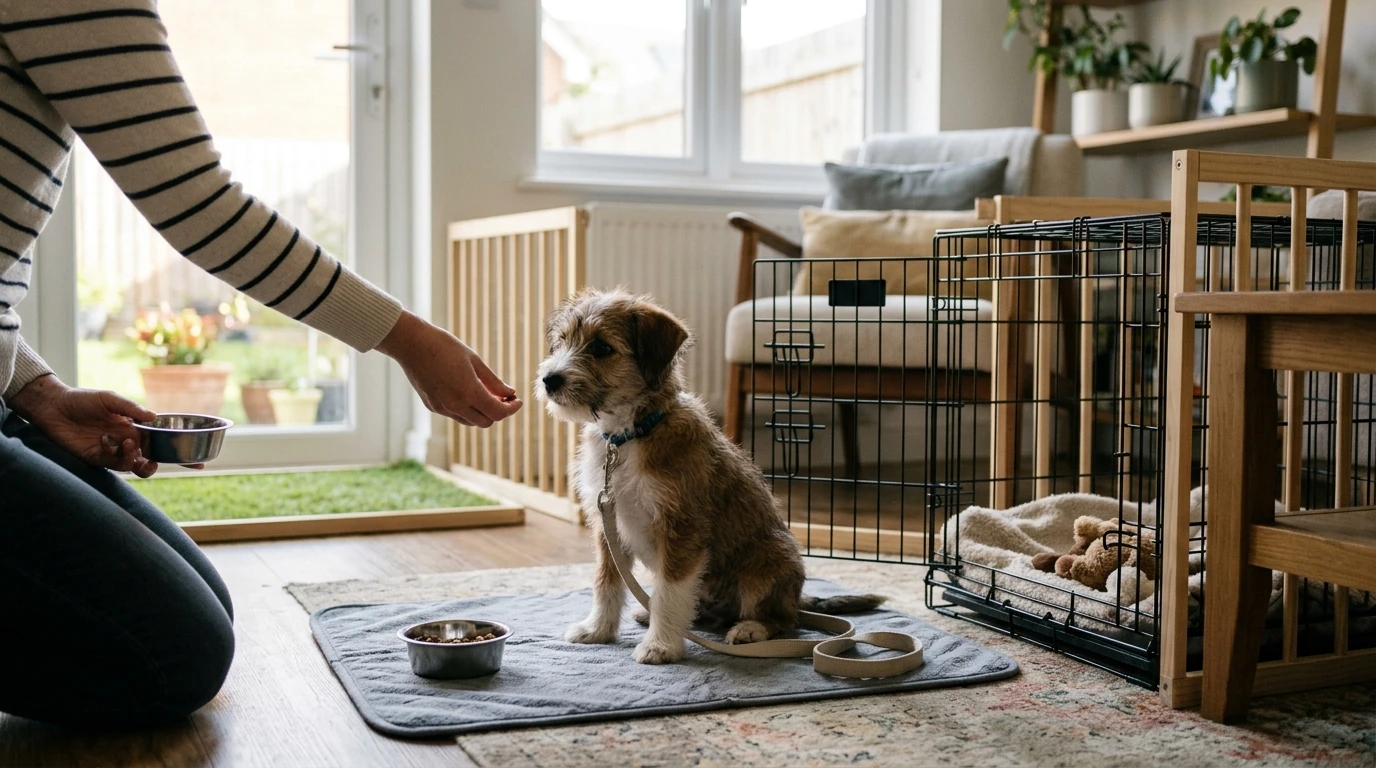
New Puppy Training Starter Guide: A 4-Week Routine for House-Training, Basic Commands, and Socialization
A new puppy learns fastest with a simple routine that repeats every day. The goal isn’t “perfect obedience”—it’s preventing preventable mistakes while reinforcing the right choices at the exact moment they happen. Below is a practical 4-week plan covering house-training, crate habits, bite inhibition, basic cues, and safe socialization, with a sample schedule you can adjust to your puppy’s age and your veterinarian’s guidance.
What to Set Up Before Training Starts
- Pick one outdoor potty spot and use it every time. The consistent location helps your puppy “connect the dots” faster.
- Choose high-value rewards (tiny, soft treats) plus a marker word like “Yes” (or a clicker) so you can pinpoint correct behavior instantly.
- Set up a crate or playpen to prevent roaming accidents, support naps, and create a default “safe place.”
- Decide household rules now (furniture, sleeping location, feeding schedule). Mixed messages slow learning.
- Puppy-proof main areas: cords, shoes, kids’ toys, trash, and chewable items go out of reach to prevent rehearsing bad habits.
A Simple Daily Routine That Prevents Problems
Most puppy problems spike when they’re overtired or under-supervised. A predictable rhythm—potty, food, short training, play, and naps—reduces accidents, nipping, and frantic “zoomies.” Keep training micro-sessions short (1–3 minutes) and frequent (3–6 times daily). If your eyes aren’t on the puppy, the puppy is in a safe space (crate/pen).
For the first few days, track meals, water, potty times, and accidents. Patterns appear quickly, and your schedule becomes easier to fine-tune.
Sample weekday rhythm (adjust to your puppy’s age and vet guidance)
| Time | What to do | Goal |
|---|---|---|
| 6:30–7:00 | Potty → breakfast → potty | Start the day accident-free; reinforce outdoor potty |
| 7:00–8:00 | Play + 2-minute training (sit/name) → potty | Build engagement and prevent nipping/zoomies |
| 8:00–10:00 | Nap in crate/pen | Teach calm settling and alone-time skills |
| 10:00–12:00 | Potty → short walk/yard sniff → training (down/come) → potty | Enrichment and recall foundation |
| 12:00–2:00 | Lunch (if applicable) → potty → nap | Support digestion schedule and rest |
| 2:00–5:00 | Supervised play/chews → socialization outing → potty | Safe exposure and bite inhibition practice |
| 5:00–8:30 | Dinner → potty → calm play → final potty | Wind down; reduce evening accidents |
| Night | Crate sleep; one overnight potty if needed | Build bladder control gradually |
House-Training: Clear Steps That Work
- Start with a timer. Many puppies need to go out every 30–90 minutes depending on age, activity, and how recently they ate or drank. Increase time slowly as success stacks up.
- Reward immediately after finishing outdoors. Aim for 1–2 seconds after the last squat. If you wait until you’re inside, the reward can attach to the wrong behavior.
- Use one potty cue. Say “Go potty” once, then stand still and boring. Movement and chatter can distract sensitive puppies.
- Accidents: interrupt, don’t punish. If you catch it in the act, calmly scoop up and go outside. Clean with an enzymatic cleaner so the scent doesn’t invite repeats.
- Learn the “about to go” signals. Sudden sniffing, circling, wandering away, or a quick sprint into another room are common tells.
For additional guidance on house-training and crate habits, the Humane Society resources offer practical, welfare-focused tips you can match to your routine.
Week-by-Week Training Focus (4 Weeks)
Week 1: Bonding and basics
Build name response, introduce a hand target (nose-to-hand touch), make the crate pleasant (treats in, door open), and keep handling gentle and brief (ears, paws, mouth). Prioritize potty rhythm and naps—overtired puppies bite more.
Week 2: Foundation cues
Add sit, down, and come indoors. Introduce a short “settle” on a mat: mark and reward when your puppy chooses to lie down. Begin leash introduction indoors (light leash drag while supervised, then short holds for treats).
Week 3: Real-life reliability
Add mild distractions: a toy on the floor, a family member walking by, or practicing in a new room. Start “leave it” with low-value items and teach tiny stays (one second at first) so impulse control grows safely.
Week 4: Polishing
Generalize cues to new places: the porch, yard, driveway, or a quiet park. Extend calm time on the mat, strengthen recall with bigger rewards, and practice polite greetings by rewarding four paws on the floor.
First Commands to Teach (and How to Teach Them Fast)
For more training demos and age-appropriate expectations, the American Kennel Club training library is a helpful reference.
Socialization Without Overwhelming Your Puppy
The American Veterinary Society of Animal Behavior (AVSAB) position statements provide evidence-based context for balancing disease risk and the critical socialization window.
Printable Plan Option for Busy Households
- New Puppy Training Starter Guide (printable 4-week routine) — a structured, beginner-friendly routine with house-training steps, command lessons, and socialization checklists.
- Sleep Reset: Guided Audio Course for Restful Nights — helpful for new puppy households adjusting to nighttime wake-ups and schedule changes.
FAQ
How long does house-training usually take?
Many puppies show big improvement in a few weeks, but reliable house-training often takes a few months depending on age, supervision, and routine consistency. Frequent trips outside, immediate rewards after outdoor potty, and preventing unsupervised roaming speed the process.
Is crate training necessary for a puppy?
It’s optional, but it’s one of the simplest tools for safety, sleep, and house-training. Make the crate positive with treats and naps, and avoid long confinement—especially during the day—so it doesn’t become stressful.
When can a puppy start socialization outings?
Follow your veterinarian’s vaccine guidance and start with low-risk environments early (carried visits, calm friends’ homes, quiet outdoor areas). Focus on positive, controlled exposures instead of high-intensity dog-park situations.








Leave a comment