Ultra-Compact 4500mAh USB-C Power Bank for iPhone
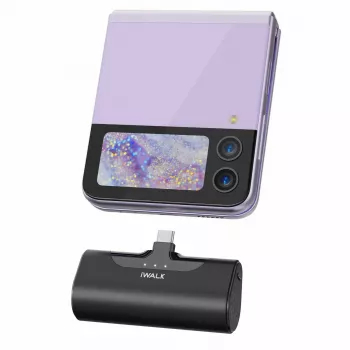
Ultra-Compact 4500mAh USB‑C Fast Charging Power Bank for iPhone & Android: Pocket Backup Power That Fits Anywhere
A small power bank can be the difference between a dead phone and finishing a commute, capturing photos, scanning tickets, or calling a ride. This ultra-compact 4500mAh USB‑C fast charging power bank is designed for quick top-ups and everyday carry, with broad compatibility for both iPhone and Android devices when paired with the right cable.
Who This Ultra-Compact Power Bank Is For
- Daily commuters who need a lightweight backup for maps, messages, and transit passes
- Travelers who want a minimal charger for airports, train stations, and day trips
- Event-goers relying on QR tickets, mobile payments, and camera use
- Students and professionals needing a quick boost between classes or meetings
- Anyone who prefers pocket-sized gear over larger high-capacity bricks
What 4500mAh Means in Real Life
A 4500mAh power bank is built for “save the day” charging—think meaningful boosts rather than multiple full recharges. While the rated capacity describes the battery cells inside the bank, the usable amount delivered to your phone is typically lower due to voltage conversion and normal efficiency losses (plus heat).
- Designed for partial recharges and emergency top-ups rather than multiple full charges
- Actual usable power is lower than the rated capacity due to voltage conversion and normal efficiency losses
- Best results come from topping up early (for example, from 20–60%) instead of trying to go from 0–100%
- Phone battery size, age, temperature, and usage during charging affect how much the boost feels like
Typical Top-Up Expectations (Approximate)
| Phone battery size (mAh) | Likely top-up range from a 4500mAh bank | Best use case |
|---|---|---|
| 2,800–3,200 | About 60–90% | Older iPhones/smaller Android phones; quick day-saver |
| 3,300–4,000 | About 45–75% | Modern mainstream phones; enough to finish a long day |
| 4,100–5,000 | About 30–60% | Large Android phones; emergency power for essentials |
USB‑C Fast Charging: What to Look For
“USB‑C” describes the connector shape, not a guaranteed speed. Charging performance depends on the power bank’s output (watts/amps) and the charging standards supported by both the bank and your phone.
- USB‑C refers to the connector shape; charging speed depends on the supported charging standards and power output
- For iPhone: fast charging typically requires a USB‑C to Lightning cable (for Lightning iPhones) or USB‑C to USB‑C (for USB‑C iPhones)
- For Android: most modern devices use USB‑C to USB‑C and may support USB Power Delivery (USB‑PD) or other fast-charge protocols
- Higher-speed charging can generate more heat; charging in a cool environment helps maintain performance and battery comfort
- If the phone is being used heavily while charging (video, hotspot, gaming), the net gain will be smaller
For model-specific guidance on iPhone fast charging, Apple explains requirements such as compatible cables and adapters here: Apple Support: Fast charge iPhone. For USB‑C and Power Delivery background, see the USB Implementers Forum resource: USB-IF: USB Type-C.
Ultra-Compact Design Benefits (and Tradeoffs)
The biggest advantage of an ultra-compact bank is that it actually gets carried. A slimmer, lighter charger is more likely to live in a pocket, small purse, sling, or jacket—ready when your battery dips at the wrong time.
- Easier to carry in a pocket, clutch, or small crossbody bag without bulk
- Convenient for short outings where a full-size 10,000mAh+ bank feels excessive
- Smaller banks usually recharge faster than very large banks, depending on the input rating
- Tradeoff: fewer total recharges compared with higher-capacity options; plan for top-ups rather than all-week power
- Compact units can be more “grab-and-go,” encouraging consistent everyday carry
Compatibility Tips for iPhone and Android
Most “compatibility issues” come down to mismatched cables or trying to fast charge with a cable that can’t handle stable power delivery.
- Match the cable to the phone: USB‑C to USB‑C for USB‑C devices; USB‑C to Lightning for Lightning iPhones
- If a phone is picky about fast charging, try a certified cable and avoid very long or damaged cables
- Remove thick cases if the device gets warm during charging to improve heat dissipation
- Enable Airplane Mode or Low Power Mode when possible for the fastest effective top-up
Safety and Battery Care Basics
For travel rules and packing guidance, reference the FAA’s lithium battery information: Federal Aviation Administration (FAA): PackSafe—Batteries, lithium batteries.
Everyday Scenarios Where a 4500mAh Bank Shines
Product Snapshot
Shop In-Stock Picks
- Ultra-Compact 4500mAh USB‑C Fast Charging Power Bank for iPhone & Android — $23.51
- Study Skills Mastery Guide | Digital Study Guide, Learning Strategies eBook, Focus Tips, Study Methods, Memory Techniques, Study Checklist PDF — $10.99
- Sleep Reset: Guided Audio Course for Restful Nights – 7-Day Sleep Meditation, Deep Relaxation, Insomnia Relief — $25.99
FAQ
Will a 4500mAh power bank fully charge an iPhone or Android phone?
Often it delivers a substantial partial charge rather than a guaranteed full recharge. Depending on your phone’s battery size, conversion losses, and whether you’re using the phone while charging, a typical boost is roughly 30–90%.
Do iPhones fast charge from a USB‑C power bank?
They can, as long as your iPhone model supports fast charging and you use the correct cable (USB‑C to Lightning for Lightning iPhones, or USB‑C to USB‑C for USB‑C iPhones) with a power bank output that supports fast-charge standards.
Is it safe to carry a power bank in a pocket or on a plane?
It’s generally safe when the power bank is in good condition and you avoid heat, crushing, or puncturing. For flights, power banks are typically required in carry-on luggage; check your airline’s lithium battery limits before traveling.









Leave a comment